Friday, 13 June 2014

Grand Theft Auto V (PS3) Review


Like most drooling nerds near Christmas time. I was super excited to get the newest GTA and waited ages to get my hands onto it. I finally grabbed this game from the stores a few days after the holidays with my saved up money. My friend owned this game before I did, and I was so happy to finally play the game for myself and see if the hype for this game was really worth it.


Contains Spoilers.
 
Grand Theft auto 5 was developed by Rockstar and was the fifth (not really if you count the side games) installment to their GTA series, which was known for their large open worlds and blowing shit up for giggles.  It was released on September 17th 2013 and was giving positive ratings from reviewers.

The story revolved around criminal acts and whores, which was a on going theme in GTA. However! The player is made to play three different types of characters who will later on cross paths and will make the player switch between them during missions to help each other out and complete it, this made it so traveling to each mission didn't feel so long as you could just switch to another character. There has been mainly one playable character in each series in the past, which makes this game fairly different from the rest. The character switching also gave a unique pacing to the action scenes.
The characters were well made. They felt different and they had different personalities; There was Trevor: The psychotic redneck. There's Micheal: The rich depressed old guy, And there's also Franklin: The clueless black guy. 
The story felt well made too. I really enjoyed the layout of the plot and although the actual introductions were fairly slow. The Prologue was very fast paced and sticks you in the middle of the action. The whole story was able to keep me interested while playing, giving us many side characters for each main character the player controls, ranging from Micheal's family, the members of grove street to simple minded Wade and his cousin.
Online also comes back from the previous game, but I'll talk more about that in the gameplay section.

The graphics are a big improvement from the last game. The character models look human-like and the landscapes are amazing, from the big city of San Andreas to the wastelands of Sandy shores. The environment makes the map from the PS2 game: GTA San Andreas to feel alot more lively and interesting, giving the player much more encouragement to explore the area. The music was well put together, mainly the radio music for inside of cars. They used alot of popular songs that most people would know and the music in the background of action sequences and missions really put you on edge that little bit more.

GTA 5 (Like all the other games in the series) is an action-adventure game in third person view. The player is given linear missions to progress the story but also gives them a open world to explore and freely roam between missions if they so please. The world can be fully explored at the beginning (after the Prologue) but the story unlocks more gameplay content, which I think is a good way of letting the players play the game as they want to play it.
Players can use melee attacks to fight enemies, swim, jump or use cars to roam the world. More weapons and vehicles can be obtained and used when the player finds them in the world or if missions are completed. The progression towards 100% completed is long and hard. I don't think you can get 100% without actually looking up what you have to do in order to complete the checklist that Rockstar gives to you on the main menu, since it really doesn't tell you WHAT to do in order to fill up each areas. Which adds to the fun of the chase but is also impossible to do blindly.
Online play is possibly the one thing I really enjoyed at first but then slowly began to get bored of it. Multiplayer has a sort of RPG style to it. To get certain weapons and other content; Players have to grind their character up to gain levels, which I find to be quite tedious, mainly when the last game just planted weapons down and gives you freedom to blow up other players or team up, which I liked. The character creation is very in depth and I give the game credit for that, but I think that the grinding is a very slow process to do just for the weapons you want. 
Spoiler:
At the end of the game. You can kill off one of the characters, which is a neat idea since it gives the player a choice, but it also makes you lose the chance to do side missions if you kill off one of them, giving you no purpose in doing so in the first place.

I think the game was very good and I enjoyed the single player very much, to the point where I felt sorry for killing Trevor off the first time I played the game and forcing myself to play the game again to save all the characters. The online was "Meh".. It was fun but I don't think it was worth the grinding that's required to get better things. Good idea but grinding is the one thing that puts me off from most RPG games.

Tuesday, 10 June 2014

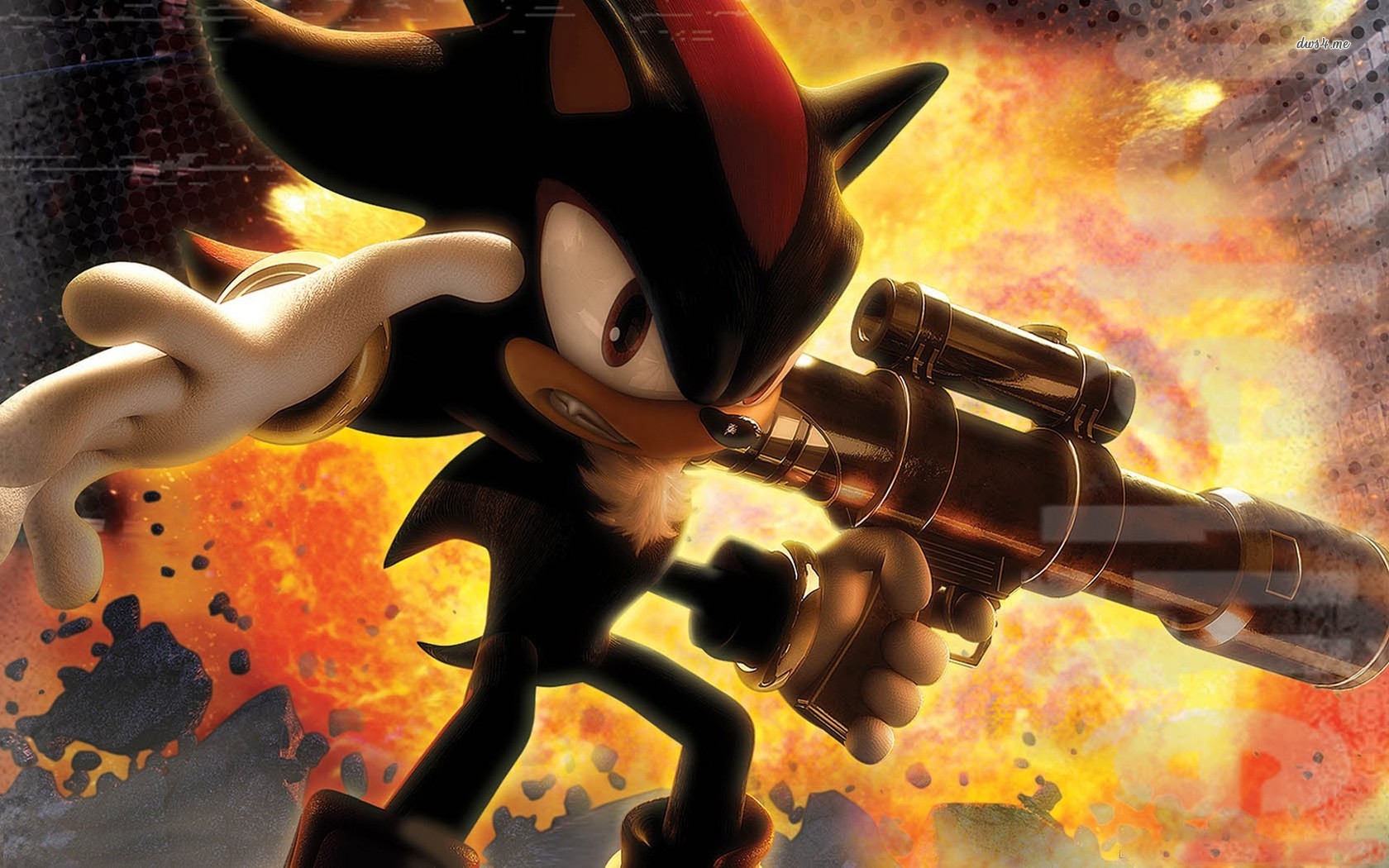
Shadow The Hedgehog (PS2) Review


I think most people had mixed views when this game came out in 2005. Even the critics gave mixed scores which left people wondering if the game was even good or if some of the elements lacked or were too much for the Sonic universe. This game was a risky installment into the Sonic series and it starred our favorite black hedgehog, Shadow.


As I said before. This game was giving mixed scores and no one knew if the game was good or bad. It was created by Sega, who are widely known for the Sonic series. They wanted to create a darker and different approach to the Sonic world, using a new main character instead of their blue spikey mascot. Trying to appeal to older kids by adding guns and increasing the violence. This game just because a sloppy mess. I must admit that I did enjoy this game for a small while, but the mechanics and the controls frustrated me when coming back to it.

The story of this game is that Shadow is suffering from the "He has Amnesia and must find out who he is" cliche. He goes to find out who Maria is from one of his memories and to figure out if he's a good guy or a villain. The way you play will alter the story depending on whether you take the Hero approach, Evil approach or sticking with neutral. I found this pick-your-own-adventure gimmick to be surprising entertaining at first, but quickly backfires into the "Meh" category since when you finish one ending. You can't pick a level to go back and complete the rest of the missions. You HAVE to start way back at the beginning, watching all the cutscenes that you had previously seen and know what happens, which ruins the charm, and you barely get anything for getting all the endings, just the "true" ending, which isn't a great reward considering that you have to replay this game 10 times to get all the endings, even more so if you accidentally picked the wrong branch and have to start over.
You meet most if not all of the past Sonic characters, including Sonic himself, Tails, Knuckles etc. Who accompany you if you pick the option to do the Hero missions. There is also Doom eye, a villian who brought aliens to earth and cause chaos, confronting Shadow at the start and making it clear that he knew him and ordering him to bring the chao emeralds to him.

The game didn't have bad graphics, nothing like Sly cooper or Devil may cry standards. They were good at most parts, having different environments to zoom through. The game was quite linear, keeping to the same design as Sonic heroes. However, because of the whole replaying for all the endings. The levels can get stale after a while. The characters wouldn't shut up when doing certain things, always telling me what to do the moment I get there like it's holding my hand which most experienced gamers (And the audience that this is aimed for will mainly be experienced at games) don't want to tolerate. The music was interesting, fitted with the levels quite well in some parts, and I even enjoyed the song in the opening, but the charm fades quickly yet again when you have to reply the levels over again, mainly the first level, but this is not really a problem for people who complete it just once.

Shadow controls like butter on rocket shoes. There is an no way of controlling Shadow very well when moving at high speeds, making it so you end up flying off the platform and losing a life. His running is quickly slidey and he turns so fast that you end up tapping the right button and slamming his face into a wall. There are a large amount of weapons that Shadow can use to defeat enemies, but really don't have a purpose when you can just use your homing attack and the aim is just a nightmare. There are also vehicles, which I also find pointless because of the speed that Shadow can go, so he can easily just outrun them. For a game with slippery and fast movement; It can also feel slow at times, since you're usually blocked off by a wall and being forced to climb or just because of the platforming (Which is hard with the controls). There are also two super power ups, each can be used if the bad karma bar is full or the good karma. Good karma lets you use Chaos control, which makes Shadow zoom through some of level with ease, which can be a pain sometimes when you have to collect things or if it stops you in a dangerous spot. Chaos blast is for the Bad karma, and lets Shadow make... well... a big blast, destorying anything within range, which I found to be useful against large crowds of enemies.

Shadow the hedgehog tried to take itself seriously and use a darker theme that was a contrast to the past games, but I think it was a good idea that was created poorly. It did have it's moments that were fun (At least for me) And the story was engaging at times, but it felt like alot was thrown at you and the pick your adventure story they had was fun at first but can quickly become tedious. It's not a BAD game, despite it's flaws. I had a fun time playing it and was even great having friends over and laughing about some of the parts that are trying to be serious, which isn't easily done with a series that's based off a blue hedgehog. I guess if you're a fan of Shadow the hedgehog, then you may have no problem with this game, but for anyone else? I would just recommended just playing through it just the once. There are much better 3D Sonic games that I would tell you to play instead of this, but at least the multiplayer on this is a little fun.


Monday, 9 June 2014

Spyro 3: Year of the dragon (PS1) Retro Review


And last but not least. We have my favorite Spyro game; Spyro 3: Year of the dragon. This game came from the glorious pants of Insomniac Games and it was truly a game that consumed most of my time as kid, trying to get all the eggs. It was a glorious gem on my shelf and the game felt like the second game but just a little bit better.


Spyro 3: Year of the dragon was named after the year of the Chinese zodiac, which was the dragon of that year. It was the third and final installment of the Spyro trilogy on the PS1 as Insomniac handed the purple dragon over to new developers and went off to work on Ratchet & Clank on the PS2 (insert feels here).  The game was released in North America on October 25, 2000 and in Europe on November 8, 2000 and was the only Spyro game in the series that wasn't released in Japan.

The game's plot starts with a celebration in the land of the dragons, which occurs every twelve years when new dragon eggs are brought to the realm. While everyone is sleeping, a rabbit called Bianca invades the realm and stole all the dragon eggs, taking them to the evil Sorceress, who scatters them through several worlds and it's Spyro's job (Like always) to collect the dragon eggs and save the day.
While chasing the thief who was stealing the dragon eggs. Spyro discovers a world which once were inhabited with dragons but were now abandoned and forgotten, being told by Sheila (One of the playable characters) that when the dragons left the realm, the magic of the world began to dry up.
Spyro is accompanied by many characters during the game, with Sparx still being his dragonfly sidekick and health bar. Characters from the previous game makes an appearance including Hunter the Cheetah, who teaches the player game mechanics and also Moneybags, who continues to be a greedy dick. There are also four other playable characters with different moves and abilities to aid Spyro and gives the player a fresh new way of playing without changing Spyro's controls. I found each character to be colourful, having their own personalities.
I felt like the story of this game had a little more depth than the other two, even giving a Hunter a love interest.

The game offered improved music and graphics, still keeping to the colorful themes of each different levels, not making anything out of place and creating the atmosphere the game wants it to have. Stewart Copeland brings his beautiful music talent back and it's better than ever. Copeland recorded entire orchestral music for the visuals for an expansive sound, and used more beat-driven melodies for the high-energy moments within the game. It felt fresh, even when repeating listening to it.

Spyro Year of the dragon keeps it's traditional controls. Fire breath, glide, charge and such are all still the main controls of the character and diving, headbutting and climbing ladders doesn't need the payment of moneybags to obtain. The main goal of the game is to collect the dragon eggs that are scattered all across the worlds. The eggs are given for completing tasks and at the end of levels, and even are just hidden around. There are 37 worlds and five hub worlds. The best thing I like about the egg collecting is that the Player does not need to gather every single egg to complete the main portion of the game up until the boss, and even certain eggs can only be found by returning to the world at a later time.
Spyro 3 also introduced "critters", which are playable characters that have their own world in each hub. There are four critters in total and they all have their own special moves and ways of playing, giving a new challenge to the player. Shelia the Kangaroo; for example, can double jump to higher places and Sgt. Byrd is armed with rocket launchers and can fly.
The game also brought mini-games to the table, some of which were featured in Spyro: Gateway to Glimmer, but the game introduces a lot more of them and rewards you with dragon eggs. These mini-games range from skateboarding, boxing and racing, as well as puzzles which are played by Spyro or the other playable characters. The only issue I have with gameplay is with Agent 9, as the aiming felt a little clumsy. I just didn't like the controlling on that level at all.

This game was my favorite and will always will be. Because it can be easy for beginners or it can be challenging. It's your own choice. You don't have to collect all the eggs and gems, or complete all the mini games, but the challenge is still there, giving experienced players the challenge they want without putting too much pressure on people who are playing it for the first time. It's a good game for anyone who's just started gaming. The egg hunt is fun and challenging if you're looking for all the eggs, and collecting them feel rewarding sometimes. This game is fun to play and it's aged well, still keeping it's child-like charm.


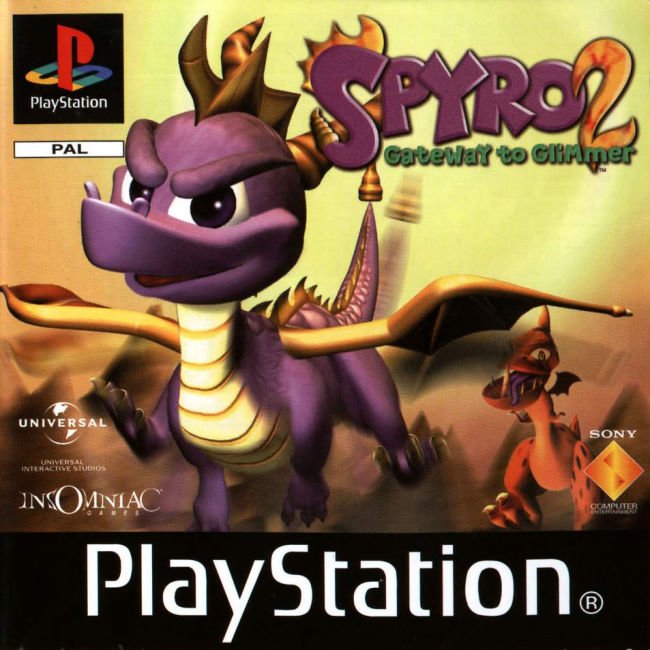
Spyro 2: Gateway to Glimmer (PS1) Retro Review


I've decided to review the whole trilogy of the Spyro series (The good series which were still in Insomniac's grubby little paws) because it's my review and it's tough titties what you guys want. Compared to it's primal little brother, Spyro the dragon. You can see that Insomniac pushed this sequel a little further by adding new moves and power ups, heck, even a new entire world.


Spyro 2 was a platformer video game developed by *drool* Insomniac Games and was the second game in the main Spyro series which was released in North America on November 2nd 1999 as Spyro 2: Ripto's rage, then was released in Europe as Spyro 2: Gateway to Glimmer (Because we like sparkles) and then in Japan on March 16, 2000.

The story is quite basic. Spyro and his familiar partner Sparx are sick of the rain and decides to go to Dragon shores but ends up in Avalar, having been summoned there by a Professor, a Cheetah and a Faun. They explain that he was sent there to defeat the evil bad guy, although he doesn't have much of a choice anyway.
The only characters from the past game that had returned in the sequel are only Spyro and his friend Sparx, which he still functions as a health meter. The new world of Avalar gave space to introduce new characters and areas that weren't in the original game but would make more appearances in the later series. Two of which I will pick at because I'll be here forever if I go through them all. Firstly, there's Hunter the Cheetah. Which I must ask.. Why teach me to jump after a whole level? You go through Glimmer before this jumping tutorial and I found it a little irritating being taught something that I had been doing about x number of times before even reaching him. Maybe I'm just nitpicking at a game designed for kids as I have a good knowledge of gaming? Who knows really.
Next is my least favorite character from the Spyro series and I despise. Moneybags. This little shit was always in the way when you were progressing through the game. No gems? Well that sucks to be you. Although he grants you with useful abilities like climbing walls and diving underwater. I don't see what impact it would have on the game if you had them beforehand. It's like the game's invisible wall, stopping you from progressing more until you've explored more.

The graphics are very well done, even-though it was on the PS1 which has to be taken into account. There's less frame rate lag (Still, might just be a personal experience). The new areas in this sequel really did feel like different levels, not just copy and pasted with a different theme on top of it. The music was composed by Stewart Copeland, who did an amazing job on creating the music on the original game.

The sequel made sure to keep the controls and gameplay similar to the original game to stop themselves from scaring away the fans of the first game. He can use his flame breath, charge attack and gliding abilities. However, now Spyro has to collect two new types of items. Tailsmans are rewarded at the end of each realm, which (when collected all of them from the world) unlocks the boss, and orbs are gained for completing side quests and are rewarded at the end of the levels in the final world before fighting Ripto. Like the last game, the levels are well paced and gives the players a free open world to wander around in, helping the non-experienced players to grasp the controls and for experienced players to just rush on ahead if they wish to. Over the course of the game, he will learn new abilities from Moneybags, including diving into deep waters to reach treasure, climbing which lets him reach higher platforms and the headbash which lets him break rocks and cages. Each level has a power up gate, which activates when Spyro defeats a number of enemies in that level, which grants him a temporary super ability, like super fire breath, ice breath, invulnerability and a super charge.

I believe Insomniac Games did a perfect job on creating a sequel of the first Spyro the dragon. They made alot of changes but it never felt over the top, and you don't even need any knowledge of the first game to enjoy this one as it's set in a different word. The characters (excluding a few.. *cough* Moneybags *cough*) Are quite enjoying and each level always introduced a new character to talk to, even if they are only for that level. I'm glad that they also kept the same composer for the music, as the music is still bouncy but fresh, although the level with the bagpipes hurt my eardrums. This game was better than the original, which how sequels are meant to be, and if you're a fan of the Spyro series. You should at least play this again.


Wednesday, 4 June 2014

Spyro the Dragon (PS1) Retro Review


Although reviewing a game is difficult on a console from the last generation. Spyro the Dragon was possibly the first game I had ever played as a child. That and also the Crash Bandicoot series. These two Sony games gained a large audience but since Spyro was the first ever game I completed (Since I'm a pyromaniac). I'm just going to review that game and see if it's aged well and if gamers should still give it some attention.


Spyro the Dragon is a Platform game developed by Insomniac Games in 1998. Who also developed the Ratchet and Clank series. Isn't this a beautiful piece of crumpet? I have so much hope for this game that I just want to plow my face into the nearest tree.

The story is that a crazy Gnasty Gnorc hears one of the dragons in the Dragon realm bad-mouthing him and ended up using his powers to turn all the dragons into statues except one which is the main character. This is a typical "You need to be the hero and save everyone" story and you play as Spyro the purple small dragon who managed to dodge the attack because of his shawty size. You have to travel to all the worlds and save the frozen dragons then defeat Gnasty Gnorc. Now it's time for some questioning. Is Gnasty Gnorc really a bad guy? He only froze the dragons because they were talking shit about him on the news (Dragons have cable?) and then ends up being slapped across the face by a baby purple dragon. The game introduces a large amount of dragons that you can interact with when you save them and you have your buddy Sparx. Who acts like your health bar.

The graphics are well done, keeping in mind that the game is made on the PS1. Because of the fictional setting and the basic designs of the characters. They look decent without them being a pile of polygons and there were no polygon glitches to be found. The music was nicely done, fitting most areas to create a nice cheerily and colourful atmosphere for children, created by Stewart Copeland who also developed the music for The Amanda Show, which happens to be a very funny show I used to like and enjoyed the music on there too.

The Gameplay is like most platformers. You can jump, attack and explore the open worlds. The downside of the game (which was fixed in the later games) was the lack of hovering, since gliding ended up difficult without clipping onto the edge of the platform you're trying to reach and falling. The difficulty curve isn't steep as the game gives you a large area to practice on. However there are times where the camera would refuse to follow the character and possibly twirl around the purple dragon like it was impersonating a hurricane.

Spyro was a big hit in 1998 and I agreed that the game was fun to play and to go back to. The movement was a little choppy but wasn't a big thing to complain about. The visuals were bright and cheerful, but also adding to the different scenery that they tried to create. When they created creepy. It was creepy. When they created gloomy. It was gloomy. It wasn't always cheerful and had contrasting dark areas. Overall. I think the game hasn't aged as well as the two others in the trilogy (I'm referring to the PS1 trilogy) and 100% completion isn't really rewarding but adds to the replay value and also adds to the difficulty in some parts. I think the game was a good game to pick up and play for a few hours but I have to say that the second and third are superior to it, which is a shame.


Tuesday, 3 June 2014

Okami (PS2) Review


In short summary; It seems a little far-fetched having a game about a god, who is a dog with a blazing Frisbee strapped onto it's back. How's that disc not burning the hairs off of that wolf?


Okami is an action-adventure game created by Clover studio, a Japanese company who also developed Viewtiful Joe on the PS2. I don't know if this is a warning sign or icing on the cake, considering that Viewtiful Joe had the strangest plot ever but did have some unique visuals. Capcom aren't great when it comes to making a story, since their games are revolved around beating the shit out of people who want you dead and since Okami was published by Capcom. I expected some thrashing.

The game is based in the world of Nippon, which literally means Japan in Japanese. It starts with a story about a typical hero going to save a girl from a monster and seals the monster away with a sword with the help of his doggy friend. Then 100 years later a twit comes and breaks the seal and a fairy calls upon the sun goddess (Aka YOU) to defeat the darkness that the twit caused.
I could go into more about the plot, but I would end up writing a book. The story follows Japanese folklore and the characters themselves are quite colourful, having interesting personalities and quirks, an example being your partner in the game called Issun, an artist who is following you to get the brush techniques. I had grown to hate this guy, since he reminded me of that one guy every group of friends has that just doesn't shut up. Luckily in this game, they follow the same voice acting as they do in animal crossing games, where the talking is like listening to a guy chew on a sock, so Issun was bearable.

The game featured an open world adventure with some fighting which occurs when you walk into an enemy. The battles work like beat 'em ups because they give you a limited amount of space during each one and lets you move on once you beat them, however you can flee from the battle by hitting the side, making a hole. I think the game just managed to pull this off as that mechanic seems hard to do in such a traditional styled landscape.
The game also has an unique feature using the Celestial Brush. You can bring up a screen of paper while holding a button, letting you being able to draw using the analog stick. Certain symbols that you can paint would trigger powers like a cherry bomb to blow up shit, it was an interesting concept that was usually popular with the DS because of the touch screen.
You are also given new weapons now and then (mainly after bosses), which can easily help you find your own fighting style and gives a little customization to the player. 
The game also allows you to upgrade things like health and how much ink you can carry, which is hard in one play-through but when you finish the game, you can run through it again, keeping the upgrades from before so you can be as stronger as before.

The graphics are in 3D and 2D (2.5D?) The models of the characters are 3D but as you look at the trees and grass, you'll see that they are 2D but just follow the camera. This might be nit picky but this distracted me so much when I first ran through the game, but possibly that's because I'm not familiar with the style. I did get used to it after a while so it wasn't hard to ignore.
The landscapes were just as you would expect from a game using traditional Japanese art. The colours are soft and almost pastel like, giving a sense that you're in a painting.
The music also fits into it perfectly, inspired by classical Japanese works. Which fits the tone perfectly.

Even-though sometimes using the paintbrush is a nightmare trying to writing a symbol, the controls are well responsive and the movement does feel more like a canine and not of a human. The moving is quick and quite floaty, like you're a gliding dog, making it good for the large areas of land you get to explore and the turning is tight. The camera angle is okay, despite it getting stuck now and then to the point of me not seeing where I was trying to jump to without smashing my skull into a wall (but maybe that's just me).

Overall. Okami is an interesting game which I think most gamers should at least try once to enjoy the fresh new experience. Some of the characters can be annoying and may drive you up the wall, but the beautiful areas to explore, tons of collectibles and the story's plot with twists and turns is a good enough excuse to pick this small gem up.


The Journey Begins


Before I get Started
Welcome

I am Pandachan. This blog's sole purpose is to review games (New and old). I'll try to keep my reviews professional and my writing informal, using humorous remarks to keep the reviews light-hearted and give you maybe a laugh or two.

So now the introduction is out of the way, I'll get started on the first one.